





A Pag-IBIG housing loan can cover different housing purposes, so the requirements depend on whether you are buying, building, improving or refinancing. Choose the correct purpose before preparing property documents.
A Pag-IBIG Housing Loan can be used for qualified housing purposes such as buying a residential lot, house and lot, townhouse or condominium, and other housing transactions allowed by the Fund. The documentary checklist changes depending on the loan purpose and how the property is being acquired.
Choose the correct housing-loan purpose
The official Pag-IBIG Housing Loan Application form includes different loan purposes, including purchase of a residential lot and purchase of a residential house and lot, townhouse, or condominium. Other programs and checklists cover construction, home improvement, refinancing, developer-assisted applications, and special housing programs.
Prepare the borrower requirements
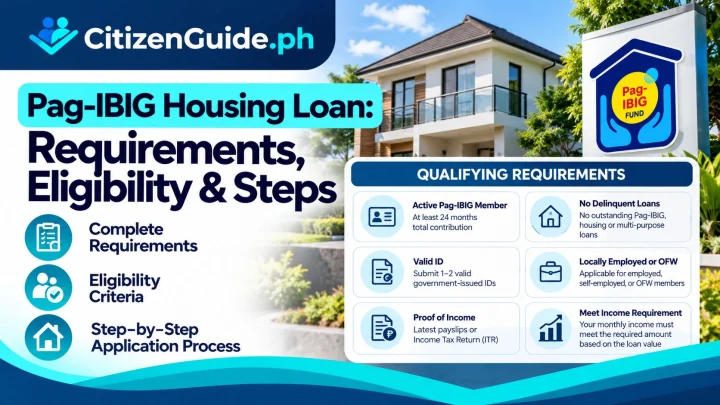
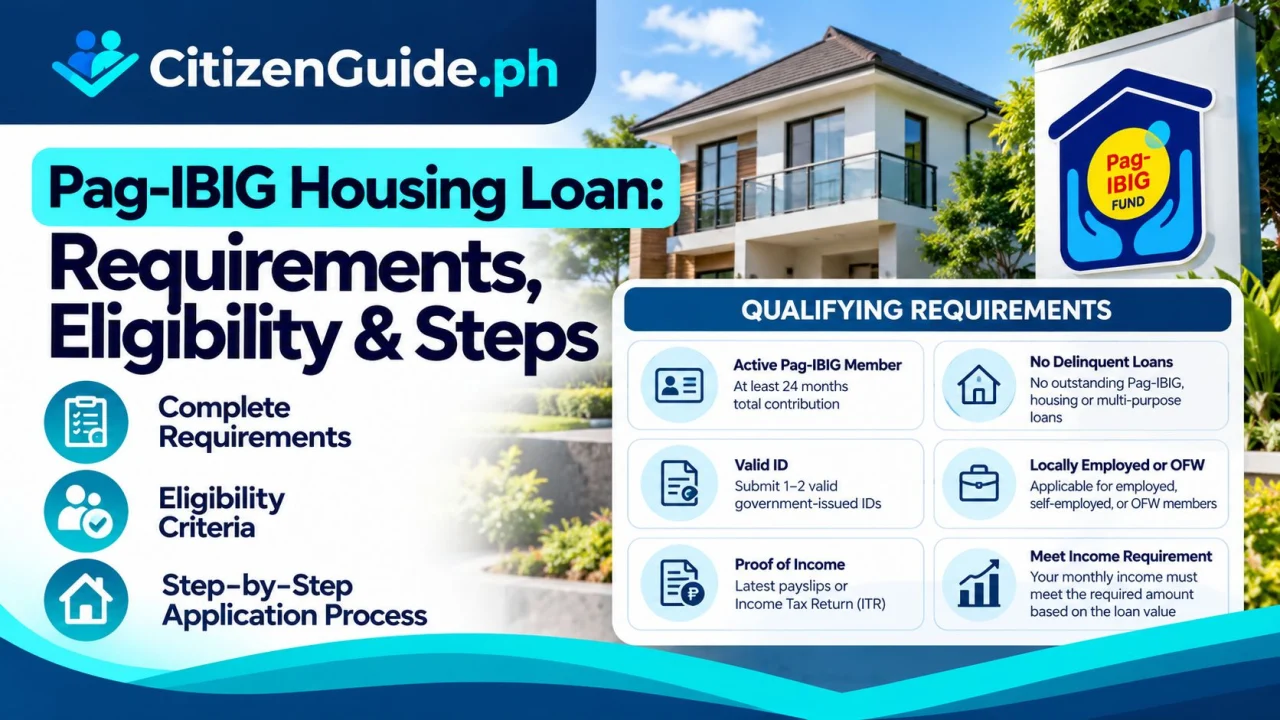
The exact checklist depends on the transaction, but common borrower documents include:
- Accomplished Housing Loan Application form and required photographs.
- Proof of income appropriate to your employment or business status.
- Valid Philippine government-issued identification.
- Pag-IBIG MID number and updated membership details.
- Spouse or co-borrower documents when applicable.
Prepare the property documents
Property documents vary by loan purpose. Retail housing-loan checklists may require the title, tax declaration, real-property tax receipts, vicinity map, appraisal-related documents, and other papers for the house, lot, condominium, construction, or refinancing transaction. Do not assume that a seller’s photocopy set is already complete for Pag-IBIG evaluation.
Step-by-step application
- Start from the official Pag-IBIG website. Download the current housing-loan form and the checklist that exactly matches your loan purpose.
- Complete the borrower and co-borrower forms. Make sure names, civil status, income, and addresses match your supporting records.
- Gather proof of income and property documents.
- Submit through the applicable Pag-IBIG channel. The route may be through a Pag-IBIG branch, an accredited/developer-assisted process, or another official housing-loan channel.
- Wait for evaluation and property appraisal. Pag-IBIG may verify employment, income, credit data, property value, and title information.
- Comply with additional requirements. Missing annotations, title issues, income discrepancies, or property-document deficiencies can delay approval.
- Review the approved loan terms before signing. Confirm the approved amount, term, repricing period, insurance, monthly amortization, and required mortgage documents.
Do not rely on a single “maximum loan” figure
The amount a borrower can actually receive depends on Pag-IBIG evaluation, the property, capacity to pay, and the program used. Use the official assessment and disclosure for your application rather than assuming that the maximum advertised program amount will be approved automatically.
Official sources
Start with the loan purpose because it changes the property file
A housing-loan application is not one generic document checklist. The property documents and release conditions depend on what you are financing. Separate the borrower requirements from the property requirements before you start collecting papers.
| Loan purpose | Property-side question to answer early |
|---|---|
| Purchase of a house/lot or residential unit | Does the seller’s ownership and property record match the property being sold? |
| Construction | Are the land ownership, plans, permits, and construction documents appropriate for the proposed project? |
| Home improvement | Does the requested work and property ownership fit the current program requirements? |
| Refinancing/loan take-out | What existing loan, title, and release documents must be coordinated before Pag-IBIG can complete the transaction? |
Do a borrower check and a property check separately
For the borrower side, review membership/savings, identity, income, employment/business records, and any co-borrower documents. For the property side, review ownership, title/tax records, location, seller information, and the documents required for the specific loan purpose. A strong borrower file cannot automatically cure a property-document problem.
Before paying a large reservation or equity amount
Understand which payments are refundable, which obligations depend on final loan approval, and what happens if the approved loan amount is lower than the selling price. CitizenGuide cannot assess a property’s legal status; when ownership or title issues are unclear, resolve them before assuming Pag-IBIG financing will proceed.