





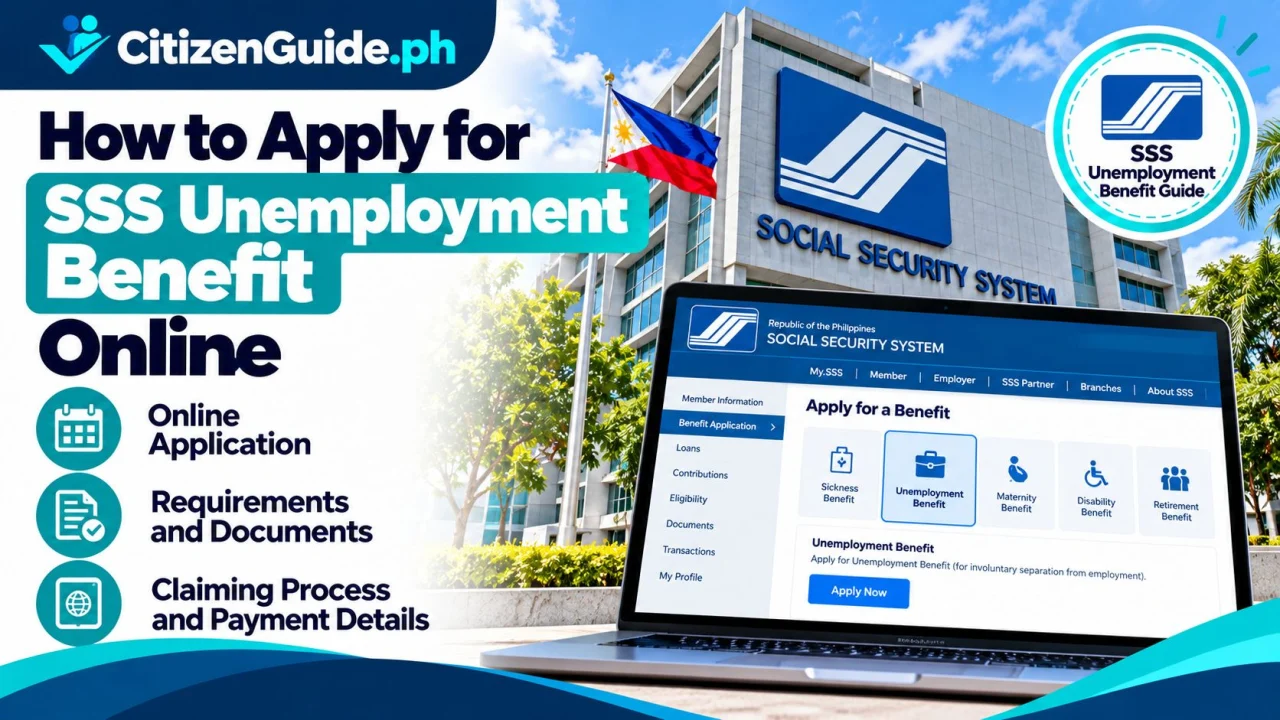
SSS Unemployment Benefit is a cash benefit for qualified covered employees, including kasambahays and OFWs, who were involuntarily separated from employment. It is not a general benefit for every person who becomes unemployed; the reason for separation and contribution history are important.
Basic eligibility
SSS currently requires the claimant to meet age, contribution, and separation rules. For most employees, the member must not be over 60 at the time of involuntary separation, must have at least 36 monthly contributions, and at least 12 of those contributions must fall within the 18-month period immediately before the month of separation. The member must also have no settled unemployment benefit within the previous three years.
What counts as involuntary separation?
Qualifying causes can include authorized causes such as redundancy, retrenchment, closure, installation of labor-saving devices, qualifying disease-related termination, economic downturn, and certain other analogous cases recognized by SSS and labor authorities. Termination for just causes such as serious misconduct or willful disobedience is generally not covered.
Prepare before filing
- Active My.SSS account.
- Approved disbursement account in DAEM or other qualified SSS disbursement setup.
- Correct employer and separation information in your SSS record.
- Notice of termination or other documentary proof when required.
- Valid identification for the labor-authority certification step.
Step 1: File the claim in My.SSS
- Log in to My.SSS.
- Open Benefits → Unemployment Benefit.
- Select the preferred disbursement account and employment category.
- Enter the involuntary separation date, employer, and reason for separation.
- Submit the online application and save the transaction number.
Step 2: Complete the certification process
Current SSS procedures can require certification of the separation details by the latest employer and electronic Certification of Involuntary Separation by the Department of Labor and Employment (DOLE) or the Department of Migrant Workers/appropriate overseas labor office for OFW cases. Follow the instructions sent by SSS because the exact route can depend on the claimant’s employment category and whether the employer is active in My.SSS.
SSS states that the member may be given a limited period after online filing to complete the labor-authority certification. Do not delay once you receive the transaction number and instructions.
Filing deadline
SSS states that an unemployment benefit claim should generally be filed within one year from the date of involuntary separation. If you are already close to the deadline, verify the current rule directly with SSS.
Official sources
Is this really an SSS Unemployment Benefit case?
Start by identifying why the employment ended. The unemployment benefit is designed for qualifying cases of involuntary separation; it is not a general cash benefit for every person who stops working. Before filing, make sure the separation reason and the supporting certification route match the actual circumstances of the job loss.
| Your situation | What to verify before filing |
|---|---|
| You were involuntarily separated | Confirm that the reason and supporting certification fall under the current SSS unemployment-benefit rules. |
| You resigned voluntarily | Do not assume the unemployment-benefit route applies; check the current eligibility rules first. |
| Your employer record or separation details are inconsistent | Resolve the employment/separation record before treating the online claim as complete. |
| You already filed a claim | Track the existing application and resolve certification or disbursement issues rather than creating a duplicate claim. |
Separate the eligibility check from the payment check
A claim can be eligible in principle but still stall because a certification, member record, or disbursement account needs attention. Keep the claim reference, separation documents, certification details, and payment-account information together so you can identify which part of the process is actually pending.
What to keep after submission
Save the online confirmation, certification reference, notices from SSS, and any disbursement-account confirmation until the claim is resolved. If the status changes but payment does not arrive, investigate the payment path first instead of filing a second unemployment claim.