



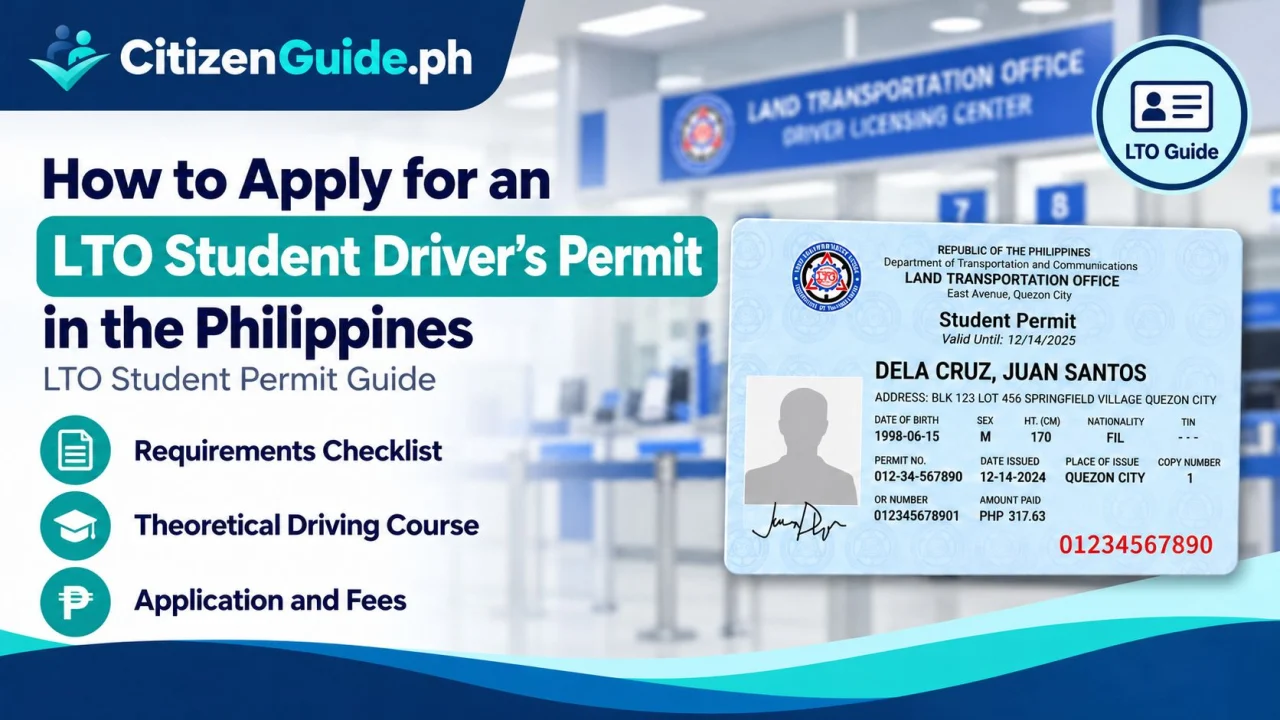
An LTO student permit is the first formal licensing step for many new drivers. Complete the required Theoretical Driving Course and make sure identity, medical and LTMS records match before applying.
A Student-Driver’s Permit is the LTO authority issued to a person who wants to learn to operate a motor vehicle. It is normally the first formal LTO licensing step before applying for a non-professional driver’s license. The applicant must meet age and fitness qualifications and complete the required Theoretical Driving Course.
Basic qualifications
LTO Citizen’s Charter materials list qualifications that include:
- For Filipino citizens, generally at least 16 years old.
- Being physically and mentally fit to drive.
- Being able to read and write in Filipino or English.
- Having no unsettled traffic violation.
- Completion of the required Theoretical Driving Course (TDC).
Foreign applicants follow additional age, stay, passport, and visa requirements.
Documents commonly required
- Accomplished Application for Permits and Licenses (APL) form.
- Electronically transmitted medical certificate from an LTO-accredited medical clinic, with the copy/original presentation required by LTO.
- Proof of identity and birth, such as a PSA birth certificate, National ID, passport, or other document accepted by the current LTO checklist.
- An issued ID with photo and signature.
- For applicants below 18, the required parent/guardian consent and government ID of the parent or guardian.
- Certificate of Completion for the 15-hour Theoretical Driving Course.
- LTO Client ID through the official public portal when required.
- TIN if required by the current LTO checklist for your employment status.
Step-by-step application
- Complete the Theoretical Driving Course. Use an LTO-accredited driving school, LTO Driver Education Center, or another provider accepted by LTO.
- Create or prepare your LTO online account. Use the official LTO public portal and make sure your profile details are correct.
- Get the medical examination. Use an LTO-accredited medical clinic so the certificate can be electronically transmitted to the LTO system.
- Prepare your identity and age documents. Bring originals and photocopies required by the current Citizen’s Charter.
- Go to an authorized LTO licensing office. Submit the application and supporting documents.
- Complete verification, photo/signature, and payment. Follow the office sequence and the amount generated for the transaction.
- Receive and review the Student-Driver’s Permit. Check your personal data before leaving the office.
For applicants below 18
LTO requires parent or guardian consent for minors, together with the required government-issued identification of the parent or guardian. Prepare this before visiting the licensing office to avoid a return trip.
Common mistakes to avoid
- Taking the TDC from a provider that is not accepted by LTO.
- Using a medical clinic that cannot transmit the certificate properly.
- Arriving without photocopies or parent/guardian documents for a minor applicant.
- Using a different spelling of your name between the LTMS profile and supporting documents.
Official sources
CitizenGuide.ph is not an LTO licensing office and cannot issue permits or modify LTMS records.
Before applying: make sure the training, medical, and identity records match
A Student-Driver’s Permit is the beginning of the licensing path, so small identity or training-record problems can follow you into later license applications. Check the records before the LTO visit.
| Checkpoint | What to verify |
|---|---|
| Theoretical Driving Course | The completion record comes from an accepted provider and matches the applicant’s identity details. |
| Medical certificate | The clinic is LTO-accredited and the transmitted information matches the applicant. |
| Minor applicant | The required parent/guardian consent and IDs are ready before going to LTO. |
| LTO online/client profile | Name, birth details, email, and other profile information match the supporting documents. |
After release: treat the permit as the start of the next stage
Check all printed/recorded details and keep the permit and training records. When you later apply for a non-professional license, use the same consistent identity information and follow the minimum holding/training requirements then in effect.