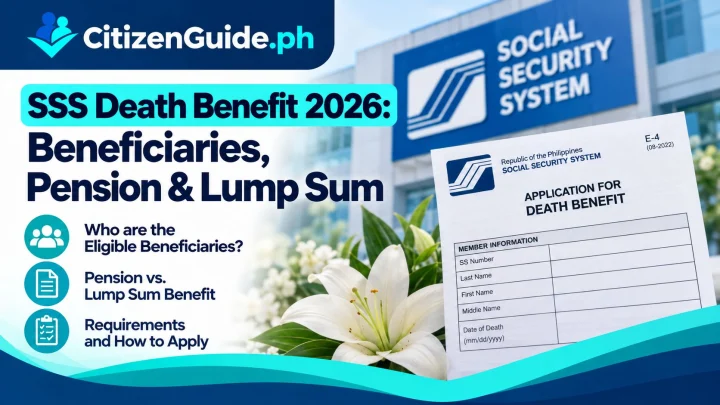






The SSS Death Benefit is paid to qualified beneficiaries of a deceased SSS member. Before collecting documents, identify which beneficiary class applies and whether the deceased member had at least 36 monthly contributions before the semester of death, because that determines whether the benefit can be a monthly pension or a lump sum.
Who is first in line for the SSS Death Benefit?
| Beneficiary level | Who may fall under it | Why it matters |
|---|---|---|
| Primary beneficiaries | Dependent legal spouse and qualified dependent children under the SSS rules | They are considered first for the death benefit |
| Secondary beneficiaries | Dependent parents, when there are no primary beneficiaries | Benefit treatment differs from the primary-beneficiary pension rules |
| Other designated person/legal heirs | Used only when the higher-priority beneficiary classes do not apply, subject to SSS records and succession rules | Usually requires closer document review |
Monthly pension vs. lump sum
SSS states that primary beneficiaries may receive a lifetime monthly pension when the deceased member had paid at least 36 monthly contributions before the semester of death. When the member had fewer than 36 contributions, the primary beneficiaries receive a lump sum under the SSS computation. In the absence of primary beneficiaries, the rules for secondary beneficiaries also use the contribution record to determine the lump-sum amount.
Death Benefit vs. Funeral Benefit
These are separate transactions. The Death Benefit belongs to qualified beneficiaries. The Funeral Benefit is claimed by the person who paid the funeral expenses. A spouse might qualify for both in some situations, but one application does not replace the other.
Step 1: Identify the claimant relationship
Check the deceased member’s civil status, spouse record, children, parents, and SSS beneficiary information. Do not assume that being the person who handled the funeral automatically makes you the Death Benefit claimant.
Step 2: Check whether online spouse filing applies
SSS allows online filing for qualified dependent legal spouses who meet the portal conditions, including having an SS number and My.SSS registration. Other beneficiary situations may require filing at an SSS branch. If your relationship does not match the online claimant route, do not force the application under another person’s profile.
Step 3: Prepare civil-registry and identity records
SSS requires the Death Claim application and claimant identity documents, plus the applicable death and relationship records. When the funeral benefit has not already been settled, the deceased member’s death certificate may be required as a basic document. Death abroad, missing or inconsistent civil-registry entries, children over the ordinary age threshold with qualifying incapacity, or other special cases can require extra evidence.
Step 4: Check names, dates and beneficiary records before filing
Compare the deceased member’s SSS name and SS number with the death certificate and the claimant’s relationship documents. A mismatch in marriage records, birth certificates, names, or dates can delay the claim. Correct or document the discrepancy instead of submitting conflicting versions without explanation.
Step 5: Prepare the benefit disbursement route
SSS may pay through a UMID card enrolled as ATM or other approved PESONet bank, e-wallet, remittance-transfer, or cash-payout options depending on the claimant and current SSS setup. The account should belong to the qualified beneficiary/claimant.